If you've just renovated or moved into a new BTO flat, you've probably searched for formaldehyde treatment and hit the same wall most homeowners hit: nobody publishes clear pricing. You get vague quotes, "depends on your unit," or no reply at all until you fill in a long form.
This guide breaks down what actually affects formaldehyde treatment cost in Singapore, what a fair starting price looks like, and what questions to ask before you book anyone.
Why Formaldehyde Treatment Pricing Isn't One Fixed Number
Unlike a haircut or a car wash, formaldehyde treatment pricing depends on the actual condition of your home — not a flat rate that applies to everyone. A few honest factors that move the price:
Size of the unit. A 3-room BTO and a 5-room condo simply don't need the same amount of treatment solution, spray coverage, or labour time. Larger spaces cost more to treat properly.
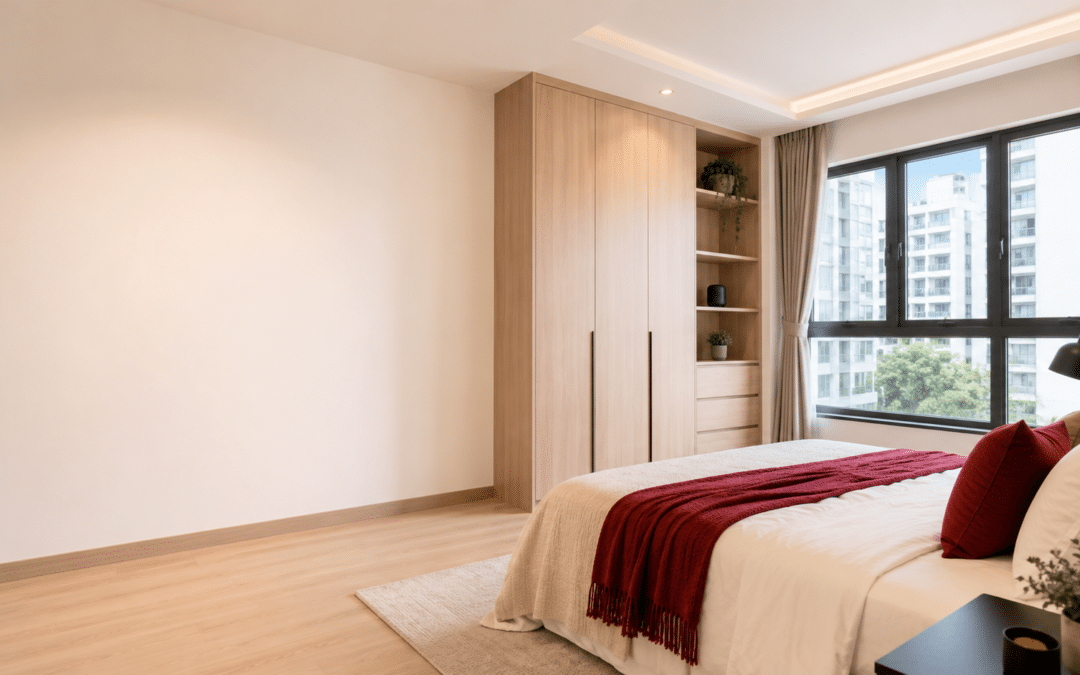
Amount of carpentry and furniture. Formaldehyde in Singapore homes mostly comes from adhesives used in cabinetry, wardrobes, laminates, and engineered wood furniture. A home with full built-in wardrobes, a study room, and a kitchen full of cabinets has far more surface area to treat than a lightly furnished unit.
How recently the renovation was completed. Freshly renovated homes (within the first few months) tend to have higher off-gassing levels, which can affect the scope of treatment needed.
Access and layout. Units with difficult access, unusual layouts, or built-in structures that need extra care may require more time on site.
Whether testing is included. Some homeowners want formaldehyde levels measured before and after treatment. This adds to scope, but also gives you something concrete to look at instead of just trusting a "should be fine now."
This is exactly why any company that gives you an instant flat price without ever seeing photos or asking about your unit should raise a small flag — it usually means the price was never really calculated for your home.
What a Fair Starting Price Looks Like
At Aura Home Solutions, formaldehyde treatment starts from S$200, with the final price depending on your unit size, the amount of carpentry and furniture inside, and the overall condition of the space. This is a starting price, not a flat price — the actual quote is confirmed after we understand your home.
We don't publish a single number and pretend every home is the same, because that isn't accurate, and it isn't fair to you either.
What You're Actually Paying For
A proper formaldehyde treatment isn't just spraying a chemical into the air. What you're paying for typically includes:
- Assessment of the areas most likely to off-gas — cabinets, wardrobes, drawers, laminate surfaces, and furniture joints
- Application of a treatment solution designed to address formaldehyde at the source, not just mask the smell
- Attention to commonly missed areas — the inside of drawers, the underside of shelves, and tight corners behind furniture
- A non-toxic, non-corrosive approach that doesn't damage your furniture finish
We use FormaldeX, which is non-toxic, non-corrosive, and leaves no residue, using G-C3N4 technology designed to treat formaldehyde concerns in renovated or newly furnished spaces. Results depend on the condition, size, and contents of your property — no treatment can promise a home that is completely risk-free, and we won't tell you otherwise.
Is It Worth Paying For If My Materials Are "Low-Formaldehyde" (E0)?
This is one of the most common questions we get, and it deserves an honest answer: E0-rated boards are lower in formaldehyde content than standard boards, but "low" does not mean zero. Adhesives, laminates, and the manufacturing process can still introduce formaldehyde, and Singapore's heat and humidity can affect how much of it is released into the air over time.
If you're renovating with E0 materials and still smell something months later, that smell — or the absence of smell — isn't a reliable way to judge whether the air is actually fine. This is why some homeowners choose to test before deciding whether treatment is necessary, rather than guessing either way.
When Should You Book Treatment?
Most homeowners consider formaldehyde treatment at one of these points:
- Right after renovation is completed, before moving in
- Before a baby, elderly family member, or pet moves into the home
- If they notice a persistent smell that hasn't faded after a few weeks of ventilation
- Even several months after renovation, if they never had it addressed and are uncertain about air quality
A common misunderstanding is assuming that if six months have passed since renovation, the problem must have resolved itself. This isn't guaranteed — off-gassing can continue longer than most homeowners expect, especially with dense carpentry.
How to Get an Accurate Quote
Because pricing depends on your actual unit, the fastest way to get a real number is to send:
- Your property type and number of rooms
- Approximate floor area
- When your renovation was completed (or if it's a new BTO)
- A few photos or a short video of the space, especially carpentry-heavy areas
This lets us give you a proper quote instead of a guess — usually within the same conversation.
Frequently Asked Questions
Does a lower price mean lower quality treatment? Not necessarily, but it's worth asking what's included. A price that seems unusually low for a large, heavily furnished unit may mean less thorough coverage. Always ask what areas are covered before comparing prices.
Can I combine formaldehyde treatment with cleaning or moving? Yes. Many homeowners choose to bundle post-renovation cleaning, formaldehyde treatment, and moving together so they only coordinate with one team instead of several separate contractors.
Do I need to test before booking treatment? Testing isn't compulsory, but it can be useful if you want a measured reading rather than relying on smell alone, since odour is not always a reliable indicator of formaldehyde levels.
Will treatment damage my furniture or flooring? FormaldeX is non-toxic, non-corrosive, and leaves no residue, so it's designed not to damage furniture finishes when applied correctly.
Ready to Get a Proper Quote?
Every home is different, and your quote should reflect your actual unit — not a generic number pulled off a price list. Send us your unit details and a few photos, and we'll get back to you with a proper quotation.
📍 Learn more or request a quotation: https://onestopsolutionssg.com/formaldehyde-removal-singapore/ 📞 Call or WhatsApp: 8852 1818