That sharp ‘new renovation’ smell may feel like a final sign that your home is ready. For families preparing an HDB flat, condominium or landed property for move-in, it can also be a reason to pause. New carpentry, built-in wardrobes, laminate flooring, paint, adhesives and furniture may release formaldehyde and other volatile organic compounds (VOCs) into the air long after the workers have left.
When comparing formaldehyde treatment versus ozone generator options, the key question is not simply which method makes a room smell fresher. It is whether the method addresses the pollutant safely, suits an occupied home, and gives you confidence before children, elderly family members or pets spend time in the space.
Why a pleasant smell is not the same as cleaner air
Formaldehyde is a colourless gas that can be emitted by composite wood products, glues, coatings and household furnishings. VOCs are a wider group of airborne chemicals that may come from renovation materials, cleaning products, paint and new furniture. Their levels can vary from room to room, particularly in enclosed bedrooms with substantial new carpentry.
Odour is not a reliable measure of either formaldehyde or VOC concentration. Some pollutants have little noticeable smell, while a strong smell could be caused by a compound that is different from the one you are trying to remove. Opening windows and running fans can help dilute indoor air temporarily, but it does not necessarily deal with ongoing emissions from materials inside the home.
That is why air-quality testing matters. It establishes a starting point, helps identify whether treatment is appropriate, and gives homeowners a clearer basis for planning their move-in date. For a nursery, a room used by an elderly parent, or a home with pets, that clarity is worth more than a quick masking scent.
Formaldehyde treatment versus ozone generator: the core difference
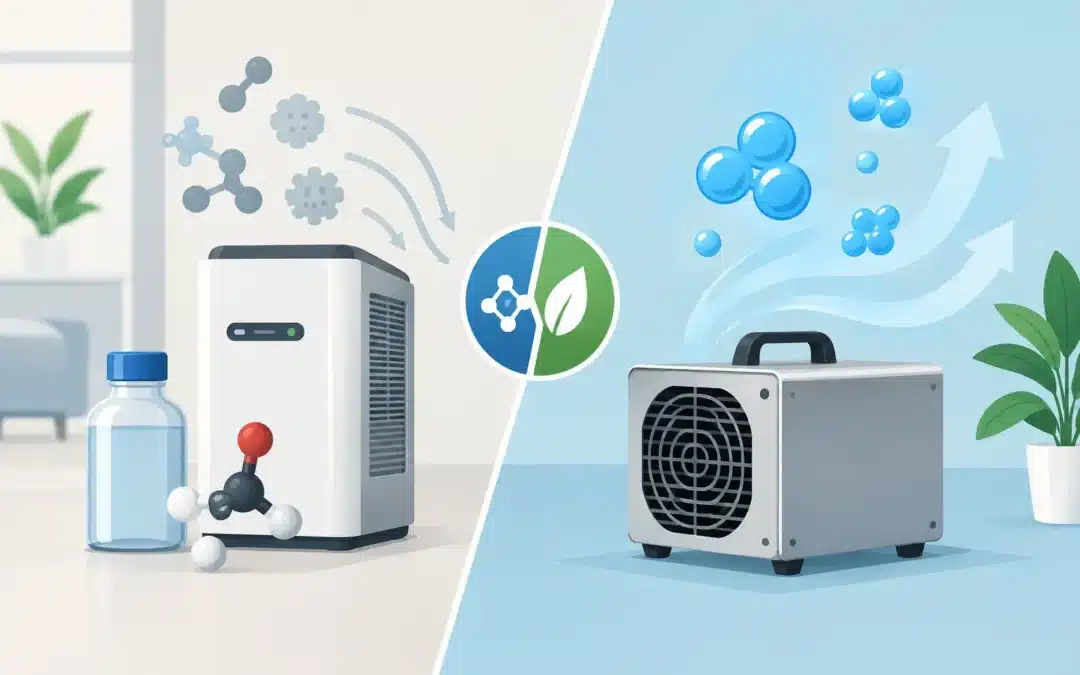
A specialist formaldehyde treatment is designed to target formaldehyde and VOCs from their source. At Aura Home Solutions, the FormaldeX process uses non-toxic G-C3N4 neutralisation treatment. The aim is to neutralise targeted pollutants rather than merely cover their odour, with treatment typically completed in around two to three hours depending on the home and scope of work.
An ozone generator works differently. It produces ozone, a highly reactive gas, in an attempt to react with odours and some airborne compounds. Ozone has been used in certain unoccupied, controlled settings for odour remediation, but it is not a casual household air-treatment tool. People, pets and plants must not be in the treated area, and the space needs appropriate airing afterwards before it can be re-entered.
The distinction matters because ozone itself is an air pollutant and respiratory irritant. A process intended to improve indoor air should not introduce an avoidable exposure concern, especially where babies, children, older residents or people with respiratory sensitivities will be living.
What ozone can and cannot do in a renovated home
Ozone generators are often marketed for smoke, mouldy smells, cooking odours and the smell of a newly refurbished room. Their appeal is understandable: buy a machine, close the door and expect the smell to disappear. Yet a renovated home is more complicated than a single odour event.
Formaldehyde can continue to off-gas from cabinetry, engineered wood and furnishings. An ozone session does not remove those materials or guarantee that emissions will not recur. Even if the room smells different afterwards, that is not proof that formaldehyde levels have been reduced to a satisfactory level.
There are practical drawbacks too. Ozone can react with substances already present indoors, potentially creating secondary by-products. It may also affect certain materials over repeated or high exposure, including rubber, fabrics and some finishes. In a new home filled with costly carpentry, curtains, soft furnishings and appliances, homeowners should be cautious about any approach that carries unnecessary material or occupancy risks.
This does not mean every ozone application is automatically inappropriate. It means it should be considered only for a clearly defined professional use case, with strict vacancy controls and suitable expertise. It is not the preferred first response for a family trying to make a renovated home safer for everyday living.
Why source-focused treatment is usually the better fit
For most Singapore households, a formaldehyde and VOC treatment is the more practical option because it aligns with the real problem: emissions from new renovation materials and furniture. A specialist should assess the home, treat relevant areas, and provide testing rather than asking homeowners to rely on smell alone.
A source-focused approach also works better with a move-in schedule. There is no need to turn the property into a no-entry zone for an uncertain period because ozone has been released. With a non-toxic treatment process, homeowners can coordinate air treatment alongside post-renovation cleaning, move-in cleaning and relocation tasks with less disruption.
The right treatment should also come with accountability. Ask whether air-quality testing is included, how long the treatment takes, whether follow-up checks are offered, what is covered by any warranty, and whether pricing is clearly stated before work begins. These are not small details. They tell you whether a provider is offering a measured service or simply a quick-fix device.
When testing should come before treatment
Testing is particularly useful when new built-in carpentry has just been installed, when the home has a persistent chemical smell, or when a room will soon be used as a nursery or bedroom. It can also be sensible after adding substantial new furniture, even if the renovation itself was completed earlier.
A professional reading gives the household something concrete to act on. If results suggest a concern, treatment can be planned around the areas most affected. If levels are already low, you avoid paying for a solution you may not need. This is the transparent alternative to guessing based on a smell that can change with humidity, ventilation and time of day.
For homes undergoing a major handover, arrange testing after the main renovation works and installation of new furniture are complete. Treating the home before the final carpentry or furnishings arrive may leave you with a fresh wave of emissions afterwards.
A safer move-in sequence for busy households
Indoor air is only one part of getting a home ready. Renovation dust settles inside drawers, on cabinet shelves, along skirting and within air-conditioning vents. It can mix with the stress of arranging movers, protecting fragile items and meeting handover deadlines.
A coordinated sequence removes much of that friction. Complete renovation works first, then carry out a thorough post-renovation clean to remove dust and debris. Once major furnishings and carpentry are in place, test the air and arrange formaldehyde and VOC treatment where needed. A final move-in clean can prepare the kitchen, bathrooms, wardrobes and living spaces for daily use before your belongings arrive.
This is where one trusted service plan can be genuinely useful. Aura Home Solutions coordinates FormaldeX treatment with cleaning and practical moving support, including 15ft lorry moves, boxes, wrapping and simple dismantling where required. Bundled move-in plans begin from $780, with the scope confirmed upfront so households are not left managing separate vendors or unexpected add-ons during an already demanding week.
Questions to ask before choosing either option
Before agreeing to an ozone generator service or purchasing a machine, ask whether it is safe for a home that will soon be occupied, how long everyone must stay away, and whether testing will verify the outcome. Ask what happens if odours or readings return after the treatment period.
For a formaldehyde treatment provider, ask what technology is being used, whether it is non-toxic, whether the process targets both formaldehyde and VOCs, and how results are checked. It is also reasonable to ask about post-treatment support. Annual follow-ups and meaningful warranty protection provide reassurance because indoor air can change as new furniture is added or a home is kept closed for long periods.
The best choice depends on your home’s condition, the materials used, the test results and who will be living there. But for a newly renovated family home, the priority should be a method that treats the issue without adding another indoor-air hazard.
A home should feel ready when the last box is carried in, not after weeks of wondering whether the chemical smell will fade. Start with proper testing, choose a treatment designed for occupied homes, and give your family a calmer first night in their new space.