
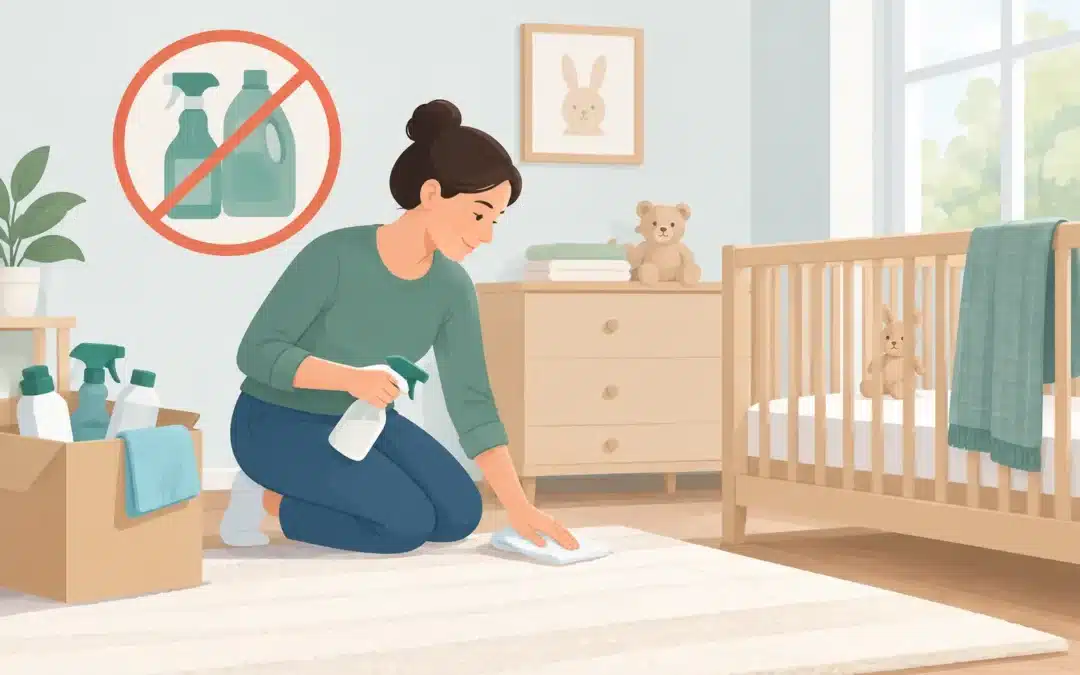
That ‘new room’ smell may feel like a sign that the nursery is ready. In a newly renovated Singapore home, however, it can also signal chemicals releasing from carpentry, paint, flooring, adhesives and new furniture. Learning how to reduce nursery chemicals before your baby arrives is less about creating a perfectly chemical-free room and more about reducing avoidable exposure, removing renovation residue and making informed decisions about the air your family breathes.
A nursery deserves particular care because babies spend long periods sleeping close to the floor, mattresses and furniture. Their smaller bodies and developing respiratory systems mean that a strong chemical odour is not something to simply cover with fragrance or wait out for a few days. A sensible plan starts before delivery day, not after the cot is assembled.
How to reduce nursery chemicals at the source
The largest source of indoor chemicals in a new nursery is often built-in carpentry. Wardrobes, cabinets and feature walls may contain composite wood products, glues, laminates and finishes that release formaldehyde and volatile organic compounds, known as VOCs. Off-gassing can continue after renovation work has ended, particularly in warm, humid conditions.
Where possible, ask your renovator about the materials being used before carpentry is installed. Low-emission boards, low-VOC paints and water-based finishes can reduce the initial chemical load. This does not guarantee zero emissions, and products described as “eco-friendly” or “low odour” should not automatically be treated as emission-free. It is still worth checking what has been specified and allowing sufficient time for the room to air before it is occupied.
If the nursery is already complete, focus on what can still be controlled. Keep doors, drawers and wardrobes open during the airing period rather than trapping odours inside. Avoid filling every storage space with new plastic boxes, freshly unpacked soft furnishings and scented products at the same time. Introducing fewer new items at once makes it easier to identify a product that is causing an unpleasant smell.
Choose nursery furniture with a practical eye
A cot, mattress and changing unit are essential. A room full of newly bought furniture is not. The simplest way to lower chemical exposure is to buy only what your household will use in the first few months, then add extra pieces gradually.
For larger furniture, look for clear information on materials and finishes. Solid wood can be a useful option, but it may still have varnish, paint or glue. Engineered wood can also be suitable when it is made to recognised low-emission standards. The key is transparency, not a label alone.
Mattresses deserve close attention because babies spend so much time on them. Let a new mattress air in a clean, well-ventilated area before use if the manufacturer’s care instructions allow it. Do not try to speed up the process with heat, perfume sprays or strong cleaning products. A waterproof mattress protector can be practical for daily accidents, but choose one with minimal odour and wash it before first use.
Wash new bedding, muslins, curtains and washable soft toys before placing them in the nursery. Use a mild, fragrance-free detergent where possible and avoid fabric softeners or heavily perfumed scent boosters. These products may make textiles smell “clean”, but fragrance can add VOCs to a room that is already managing emissions from renovation materials.
Clean renovation dust properly before styling the room
Chemical concerns and renovation dust often arrive together. Fine dust can settle inside drawers, on ledges, behind built-in furniture and on air-conditioning vents. It may contain residue from sanding, drilling, paintwork and construction materials. Wiping only visible surfaces is rarely enough for a nursery.
A thorough post-renovation clean should happen before nursery furniture, bedding and baby items are moved in. The process should include detailed vacuuming with suitable filtration, damp-wiping hard surfaces, cleaning internal cabinetry and removing residue from windows, tracks and hard-to-reach edges. Dry dusting can simply push fine particles back into the air, so it is not the best final step for a room where a baby will sleep.
Be selective with cleaning solutions. Bleach, strong disinfectants and perfumed sprays are not automatically necessary for a new nursery. For routine preparation, a low-odour product used correctly and followed by good ventilation is usually the calmer choice. Never mix cleaning chemicals, even if the room still smells of paint or adhesive. Mixing products can create irritating fumes and will not remove formaldehyde from furniture.
Ventilate wisely, but do not rely on ventilation alone
Fresh-air ventilation helps disperse airborne VOCs and lingering odours. Open windows when outdoor conditions are suitable, create cross-ventilation where safe, and run fans to move air through the room. In Singapore, this may need to be balanced with rain, haze, traffic pollution, humidity and mosquito control. If windows need to remain closed at certain times, use air-conditioning sensibly and keep filters clean.
Ventilation is helpful, but it does not stop formaldehyde and VOCs from being released by their source materials. Air purifiers can support particle control when fitted with appropriate filters, yet their effectiveness against gases depends on the model, filter condition and room size. They should not be presented as a complete answer to a strong chemical smell from new carpentry.
Avoid ozone-generating devices and unverified “odour removal” methods in a baby’s room. A fragrance that masks the smell is not evidence that the air is safer. The more useful question is whether the underlying pollutants have been reduced and whether the room has been properly assessed.
Test the air when the nursery is newly renovated
Your senses matter. If a nursery smells sharp, sweet, chemical or stuffy, treat that as a reason to investigate rather than an inconvenience to hide. But odour alone is not a reliable measure of indoor-air quality. Some pollutants are noticeable at low levels, while others may be present without a strong smell.
Air-quality testing provides a clearer starting point, especially where the nursery includes extensive built-in carpentry, freshly painted walls or new furniture. It can help homeowners understand whether formaldehyde and VOC levels need attention before a baby begins sleeping in the room. Testing is also valuable after treatment, as it gives the household a more objective way to check progress.
For homes with elevated readings or persistent odours, source-focused treatment may be more appropriate than prolonged airing alone. Aura Home Solutions uses non-toxic G-C3N4 neutralisation under its FormaldeX service to target formaldehyde and VOCs at their source. Treatment is typically completed in two to three hours, with free air-quality testing, annual follow-ups and five-year warranty protection available for added peace of mind. It is designed for families who want a practical answer before move-in, including households with children, elderly residents and pets.
Build a calmer nursery routine after move-in
Once the nursery is ready, keeping it lower in chemicals is mostly about small, repeatable choices. Air the room regularly when conditions allow, wash bedding with gentle products, and keep fragrance sprays, reed diffusers and scented candles out of the sleeping area. Store paints, adhesives, insecticides and strong cleaners outside the nursery, preferably in a well-ventilated utility area.
Be mindful of pest control too. Singapore homes may need practical solutions for mosquitoes and ants, but avoid applying sprays around the cot, changing table or toy storage. Use physical barriers first, such as window screens and careful food storage, and follow product directions precisely if treatment is necessary.
There is no need to make the nursery bare or stressful to maintain. A comfortable cot, clean textiles, sensible storage and fresh air are enough to create a welcoming space. The goal is not perfection. It is giving your child a room that feels prepared, clean and reassuring from the first night home.