A home can look spotless after a quick clean and still hold fine renovation dust inside drawers, grease on kitchen surfaces and residue around fittings. That is why the choice between deep cleaning versus standard cleaning matters most just before handover, relocation or move-in – especially when children, elderly family members or pets will be using the space.
The right service is not necessarily the biggest one. It depends on your home’s condition, what has happened there recently and how soon you need to settle in. A clear scope helps you pay for the work your home genuinely needs, with no hidden add-ons or surprises on moving day.
Deep cleaning versus standard cleaning: the key difference
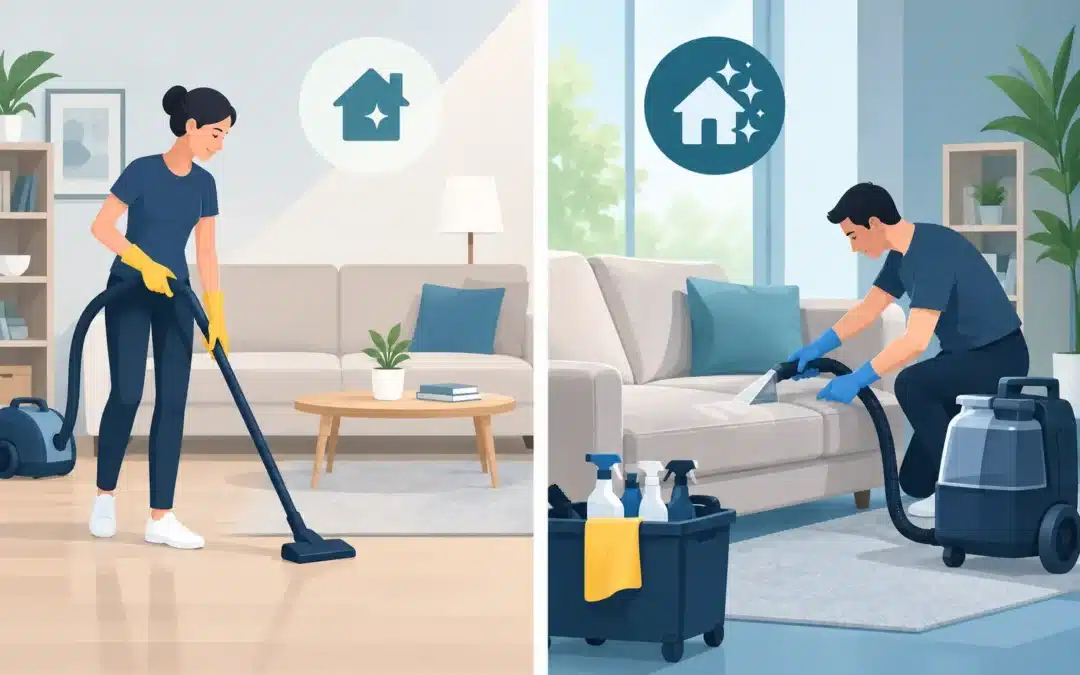
Standard cleaning is designed to maintain a home that is already in reasonable condition. It focuses on the visible, regularly used areas: floors, worktops, accessible surfaces, bathrooms, bedrooms and common areas. Think of it as a practical reset that keeps day-to-day dust, marks and household mess under control.
Deep cleaning goes further into the places that routine cleaning often misses. It tackles built-up grime, detailed areas and harder-to-reach surfaces, such as inside cabinets, behind accessible appliances, window tracks, skirting, switches, doors and bathroom fittings. The team spends more time on individual rooms because the work is more detailed.
For a lived-in flat that receives regular housekeeping, standard cleaning may be enough. For a property that has been vacant, handed over by a previous occupant, prepared for tenants or left dusty after minor works, deep cleaning is usually the more sensible choice.
Neither service should be confused with post-renovation cleaning. Renovation creates a different level of fine dust, debris and surface residue. It requires suitable equipment, careful vacuuming and a methodical approach before any move-in clean can make the home feel ready.
What standard cleaning usually covers
A standard clean is best for upkeep. In an occupied HDB flat, condominium or landed home, this normally means cleaning the floors, wiping reachable surfaces, refreshing the kitchen worktop and sink, cleaning toilets and showers, removing everyday dust, and emptying bins where agreed.
It is a useful service before guests arrive, after a busy period at home or when work and family commitments have made regular housekeeping difficult. The goal is a fresher, more comfortable home without turning the appointment into a full restoration project.
Because time is focused on the main living areas, standard cleaning may not include interior cabinet cleaning, stubborn grout treatment, heavy grease removal, high-level dusting or detailed work around renovation fixtures. These tasks take longer and should be confirmed in the service scope rather than assumed.
When deep cleaning is worth booking
Deep cleaning is often the better investment when cleanliness needs to be established, not simply maintained. It is particularly useful after a long vacancy, before moving boxes and furniture into a new place, after a tenancy ends, or when a kitchen and bathrooms show visible build-up.
For a move-in, a deep clean creates a clean baseline. You know that the shelves, drawers, handles, internal cupboards and overlooked edges have been addressed before you begin arranging clothes, cookware and children’s belongings. This can save time later, when access becomes harder after the home is fully furnished.
It also suits homes where regular cleaning has been inconsistent. Grease around hob areas, soap residue on shower screens, dust in tracks and fingerprints on doors may sound minor individually, but together they can make an otherwise attractive property feel less welcoming.
Deep cleaning has limits, however. It cannot repair damaged grout, remove permanent staining, reverse mould-related building issues or restore worn materials to a new condition. A professional provider should be clear about this before work begins. Honest expectations protect both your home and your budget.
Why post-renovation cleaning needs its own scope
Newly renovated homes present a specific challenge: renovation dust travels. It settles inside wardrobes, along ledges, around hinges, in floor corners and on surfaces that may appear clean at first glance. Adhesive traces, paint splatters and protective-film residue can also need specialist attention.
A standard clean is unlikely to be sufficient in this situation. Even a general deep clean may need to be adapted if there is substantial construction dust or if carpentry, flooring and appliances have only just been installed. The cleaning sequence matters. Dust should be removed thoroughly before furniture, soft furnishings and personal items arrive, otherwise it can be redistributed throughout the home.
Ask for a clearly stated post-renovation scope that identifies the rooms covered, the treatment of cabinets and built-ins, the approach to dust removal, and any exclusions for delicate surfaces. Newly installed fixtures can be easily scratched by unsuitable tools or overly harsh chemicals, so care is as important as effort.
Cleaning improves surfaces, not indoor-air chemicals
A clean home should feel safer and more comfortable, but cleaning alone does not eliminate formaldehyde or volatile organic compounds, known as VOCs. These emissions can come from new carpentry, engineered wood, paints, adhesives, flooring and furniture. They may remain present even when every surface is dust-free and the home smells fresh.
This distinction is especially relevant for families preparing a nursery, households with elderly residents and pet owners. Opening windows and cleaning regularly can help with general comfort, but they do not neutralise emissions at their source.
Where indoor-air concerns are part of your move-in plan, arrange air-quality testing and a dedicated treatment separately from cleaning. Aura Home Solutions uses non-toxic G-C3N4 neutralisation through its FormaldeX service to address formaldehyde and VOCs at source, with treatment typically completed in two to three hours. Cleaning and air treatment solve different problems, and coordinating both gives your household a more complete preparation plan.
How to choose the right service before moving day
Start with the home’s recent history. A well-maintained property that has had no building work may only need standard cleaning. A vacant resale home, a unit after tenancy or a property with greasy kitchen surfaces will often benefit from deep cleaning. A newly completed renovation should be assessed for post-renovation cleaning first, followed by a final move-in clean if needed.
Next, think about timing. Book cleaning before the removal lorry arrives whenever possible. Empty rooms allow the team to reach floors, storage interiors and edges without working around boxes and furniture. If you are coordinating renovation completion, air treatment and a move, set the order early so one task does not undo another.
Finally, check the inclusions in writing. A transparent quotation should state the number of rooms, whether internal cabinets are included, what happens with windows and balconies, whether heavy stains are chargeable, and whether cleaning materials and equipment are provided. If an item matters to you, such as a baby’s wardrobe or the kitchen drawers, mention it before the appointment.
A practical move-in sequence for Singapore homes
For most newly renovated households, the smoothest order is to complete all dusty renovation work, carry out post-renovation cleaning, arrange indoor-air treatment and testing, then bring in furniture and personal belongings. A final light clean after delivery can take care of packaging dust and footprints.
The sequence can vary. If built-in carpentry is still being adjusted, wait until drilling and touch-ups are finished before final cleaning. If loose furniture is arriving early, protect it well and make sure the cleaning team can still access key surfaces. The aim is not perfection for its own sake; it is to avoid paying twice for the same work.
A home is ready to live in when it is clean where you touch and store everyday items, clear of renovation dust, and supported by a considered plan for indoor air. Choose the level of cleaning that matches the condition of your property, ask direct questions about the scope, and give your family the calmer start they deserve.