
Formaldehyde is one of the most common indoor pollutants found in Singapore homes — especially new condos, renovated flats, and freshly furnished bedrooms. But because it’s invisible (and odourless after a while), many homeowners assume it’s harmless and will “fade away.”
The truth?
Ignoring formaldehyde doesn’t make it go away.
It makes the problem longer-lasting and more harmful — especially in Singapore’s humid climate.
Here’s what really happens when formaldehyde is left untreated.
🧪 What Is Formaldehyde and Where Does It Come From?
In Singapore homes, formaldehyde often comes from:
- New built-in carpentry (wardrobes, cabinets, bedframes)
- MDF / plywood furniture
- Glue, adhesives, floorboards
- Paints and coatings
- Renovation materials
These materials off-gas formaldehyde slowly — sometimes for 2 to 5 years.
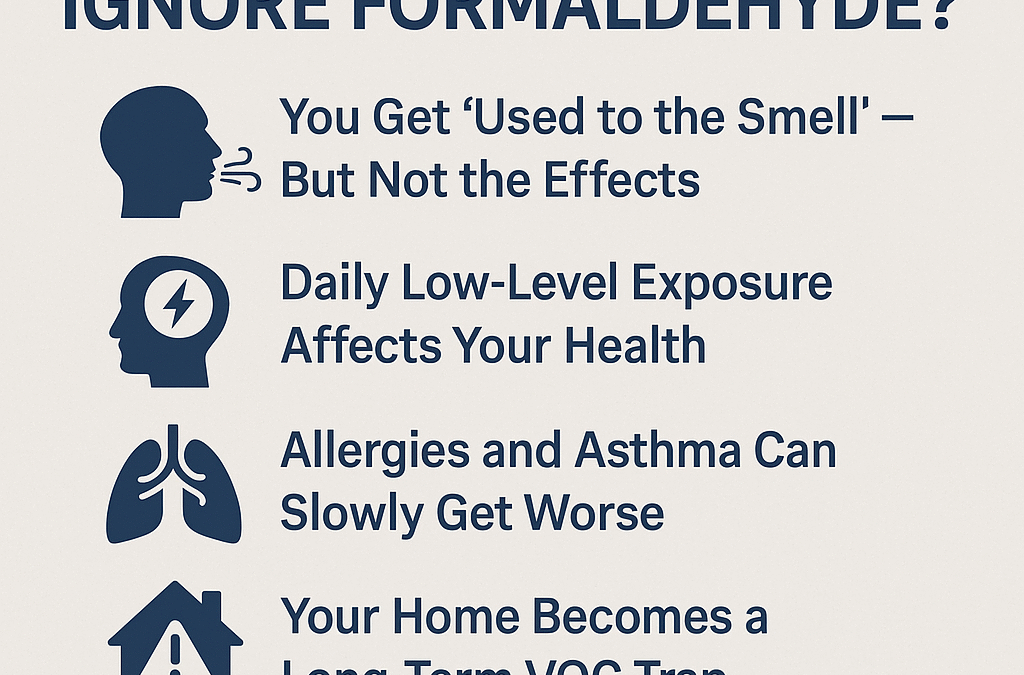
⚠️ What Happens When You Ignore Formaldehyde Over Time?
1. You Get “Used to the Smell” — But Not the Effects
After a few days or weeks, homeowners stop noticing the smell.
But the gases are still there, especially during:
- Hot afternoons
- Humid days
- Nights when windows are closed
Your nose adapts.
Your body does not.
2. Daily Low-Level Exposure Affects Your Health
Long-term exposure may cause:
- Frequent headaches
- Sinus issues
- Skin irritation
- Eye and throat dryness
- Worsened allergies
- Trouble sleeping
Children and elderly are most affected because they breathe faster — and spend more time at home.
3. Allergies and Asthma Can Slowly Get Worse
Formaldehyde is a known respiratory irritant.
Over time, it can:
- Trigger asthma attacks
- Worsen eczema or dermatitis
- Increase sensitivity to dust and VOCs
Many homeowners don’t realise the “allergies” started after renovation or buying new furniture.
4. Your Home Becomes a Long-Term VOC Trap
In Singapore’s humidity, formaldehyde is released faster, meaning:
- Levels spike during hot, humid days
- Aircon + closed windows trap the gas inside
- Indoor air quality worsens year after year
Ventilation helps only temporarily.
Air purifiers don’t remove formaldehyde molecules.
5. New Furniture and Carpentry Keep Releasing Gases for YEARS
Formaldehyde doesn’t stop off-gassing after renovation.
Most homes take 24–48 months to naturally reduce VOC levels.
If you add new furniture — the cycle restarts.
This is why the problem lasts far longer than homeowners expect.
🌱 Why Treating Formaldehyde Early Matters
By addressing formaldehyde early, you protect:
- Your family’s long-term health
- Your child’s immune system
- Your home’s air quality
- Your daily comfort and sleep
This is where FormaldeX makes a measurable difference.
🔬 The FormaldeX Solution: Safe + Long-Lasting
FormaldeX uses G-C3N4 (graphitic carbon nitride) — an advanced technology that:
- ✔️ Breaks formaldehyde down at the molecular level
- ✔️ Is 100% non-toxic and non-corrosive
- ✔️ Leaves no stains or residue on furniture
- ✔️ Works even in Singapore’s humidity
- ✔️ Comes with a 5-year clean air warranty + annual follow-up
Instead of waiting years for the smell to fade, FormaldeX removes the root cause — safely and permanently.
📌 Key Takeaway
Ignoring formaldehyde doesn’t make it disappear.
It makes it more harmful, more persistent, and more damaging to your home’s air quality.
Take control early.
Create a home that is safe, comfortable, and truly healthy.
👉 Book your FormaldeX treatment today and protect your family for the next 5 years.