
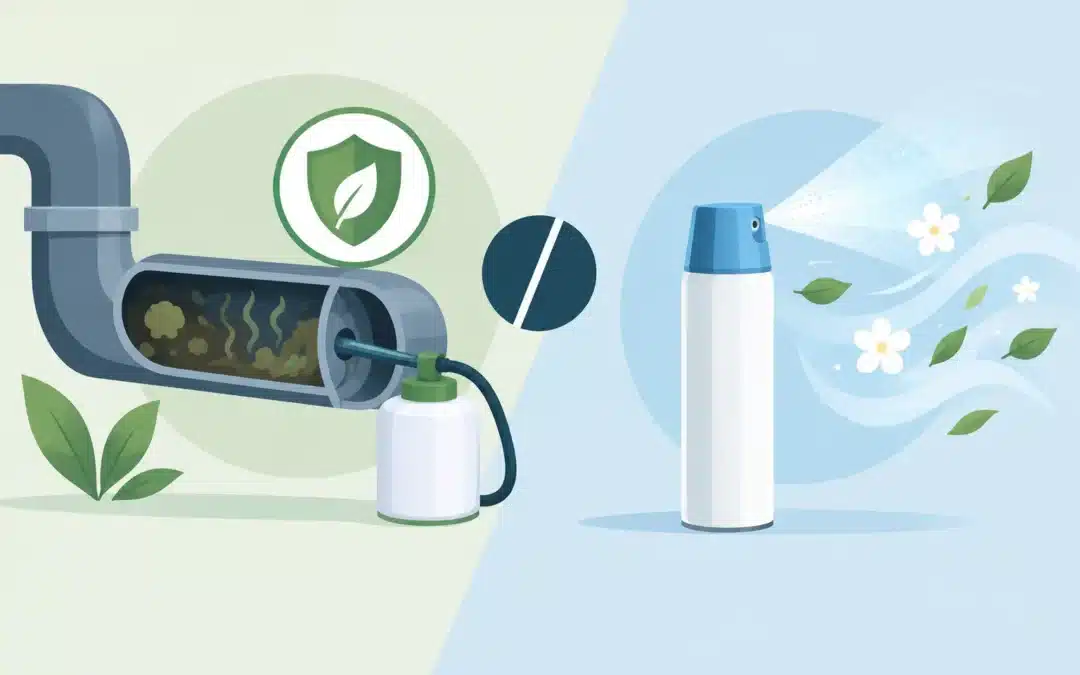
A newly renovated flat can look ready long before it feels ready to live in. The carpentry is fitted, the paint has dried and the cleaning is complete, yet a chemical smell remains when the windows are shut. This is where the choice between source treatment versus masking sprays matters. One approach aims to deal with pollutants released by renovation materials and new furnishings; the other mainly changes what you smell for a while.
For households preparing a nursery, welcoming elderly parents or settling pets into a new home, a pleasant fragrance is not the same as cleaner indoor air. Knowing the difference helps you choose a move-in solution based on safety, not just first impressions.
Why new homes can smell chemical
That familiar “new renovation” smell can come from volatile organic compounds, or VOCs, released by paint, adhesives, sealants, flooring, curtains, built-in cabinetry and furniture. Formaldehyde is one VOC that deserves particular attention because it can continue off-gassing from composite wood products, laminates and glues after handover.
Ventilation can reduce the concentration of airborne pollutants, and it is a sensible first step. In Singapore’s humid weather, however, leaving windows open all day is not always practical. Air-conditioning, rain, dust, security and daily routines can limit how consistently a home is aired.
The more challenging issue is that emissions may continue from their original materials. A room may smell better after several days of ventilation, then develop an odour again once doors and windows are closed. That does not necessarily mean the cleaning was poor. It may mean the source is still releasing pollutants.
Source treatment versus masking sprays: the real difference
Masking sprays are designed to cover unwanted odours with fragrance. Some products use perfume, while others include odour-counteracting ingredients that make a smell less noticeable. They can be useful for a short-term situation, such as refreshing a room before guests arrive or managing a temporary cooking smell.
But masking is not the same as removal. If a spray only adds fragrance, formaldehyde and VOCs may still be present even though the room now smells of citrus, linen or flowers. For sensitive occupants, heavily fragranced products can also be unpleasant in their own right, particularly where there are babies, asthma sufferers, elderly residents or pets.
Source treatment takes a different route. It is intended to neutralise or reduce pollutants at the point where they are emitted, rather than placing another scent into the room. A professional assessment should begin with air-quality testing, because smell alone is not a reliable measure of formaldehyde or VOC levels. Some pollutants have little odour, while a strong smell may come from a substance that is not the only concern.
At Aura Home Solutions, the FormaldeX service uses non-toxic G-C3N4 neutralisation treatment to address formaldehyde and VOCs at their source. The treatment is completed in around two to three hours, followed by clear guidance on the home’s air quality and what to do next. This is a practical option for homeowners who want more than a room that simply smells different.
What each option can and cannot do
The fairest comparison is not that sprays are always useless. They have a limited, suitable role. A light odour from a bin, shoes or last night’s dinner may be managed temporarily with a suitable household product after the underlying cause has been cleaned. The key is not to expect it to solve an emissions problem from brand-new joinery or furniture.
A source-focused professional treatment is more appropriate when the odour is persistent, returns after airing out, or appears throughout rooms containing new carpentry. It is also worth considering before moving in if the household includes very young children, older relatives, pets or anyone who is particularly sensitive to chemical smells.
Neither treatment nor a spray replaces sensible housekeeping. Renovation dust should be removed through proper post-renovation cleaning, including fine dust on ledges, inside cabinets and around air-conditioning vents. Dampness, mould, drains and food waste have different causes and require different solutions. Honest advice means identifying the problem before applying a one-size-fits-all product.
Why fragrance can give false reassurance
Our sense of smell adapts quickly. After a few minutes in a scented room, you may barely notice the spray at all. You may also stop noticing the original chemical odour, even if the air has not materially changed. This is why a pleasant-smelling home should not be treated as proof of healthy indoor air.
There is another trade-off. Strong fragrances can make it harder to tell whether a renovation-related smell has reduced naturally over time. If you are trying to assess a newly fitted wardrobe, kitchen cabinet or bedroom feature wall, adding perfume may blur the picture rather than clarify it.
Air-quality testing provides a more useful starting point. It gives homeowners a clearer basis for deciding whether to ventilate further, review likely emission sources or arrange professional neutralisation. It also avoids unnecessary spending on repeated bottles of products that only offer a short-lived sensory fix.
A safer move-in sequence for renovated homes
The best results usually come from organising the move-in journey in the right order. Once renovation works are complete, begin with a thorough post-renovation clean to remove accumulated fine dust and residue. This is particularly important before unpacking clothing, bedding, kitchenware and children’s items.
Next, assess indoor air quality before filling the home with more furnishings and boxes. New items can add to the overall VOC load, so treating the home early can be simpler than trying to work around a fully occupied space. Where a formaldehyde and VOC treatment is recommended, schedule it after major carpentry and before the family settles in.
Continue practical habits afterwards: ventilate where feasible, avoid smoking indoors, follow product care instructions and choose low-odour products for future touch-ups. If you are bringing in new furniture later, pay attention to fresh chemical smells and allow time for airing before placing items in bedrooms or nurseries.
For busy homeowners, coordinating cleaning, air treatment and moving through one service plan reduces handover stress. It means fewer appointment clashes, less repetition and a clearer idea of what has been completed before the first night in the home. Transparent inclusions matter here. Ask what testing is provided, how long treatment takes, whether it is non-toxic, and what warranty or follow-up support is included.
When a masking spray may still be reasonable
There is no need to throw away every household deodoriser. A mild, carefully chosen spray may be convenient for a short-lived everyday odour once the actual source has been handled. Use it sparingly, keep rooms ventilated where possible and avoid spraying directly onto children’s belongings, pet bedding, food-preparation surfaces or delicate finishes.
The line to draw is simple: do not use fragrance as a substitute for investigation. If a chemical smell lingers after cleaning and ventilation, or if it becomes more noticeable when the home is closed up, treat it as a reason to check the air rather than a cue to apply more perfume.
Choose confidence over cover-up
Moving into a renovated home should feel exciting, not like a guessing game about what is in the air. Masking sprays can make a room smell nicer for a short time, but they do not automatically address the formaldehyde and VOCs that may be released by new materials.
A source-led approach, supported by testing, professional treatment and warranty protection, gives families a more meaningful form of reassurance. Before arranging the lorry, unpacking the boxes or setting up the nursery, give your home the chance to be not only clean and fresh-smelling, but genuinely more comfortable to live in.