
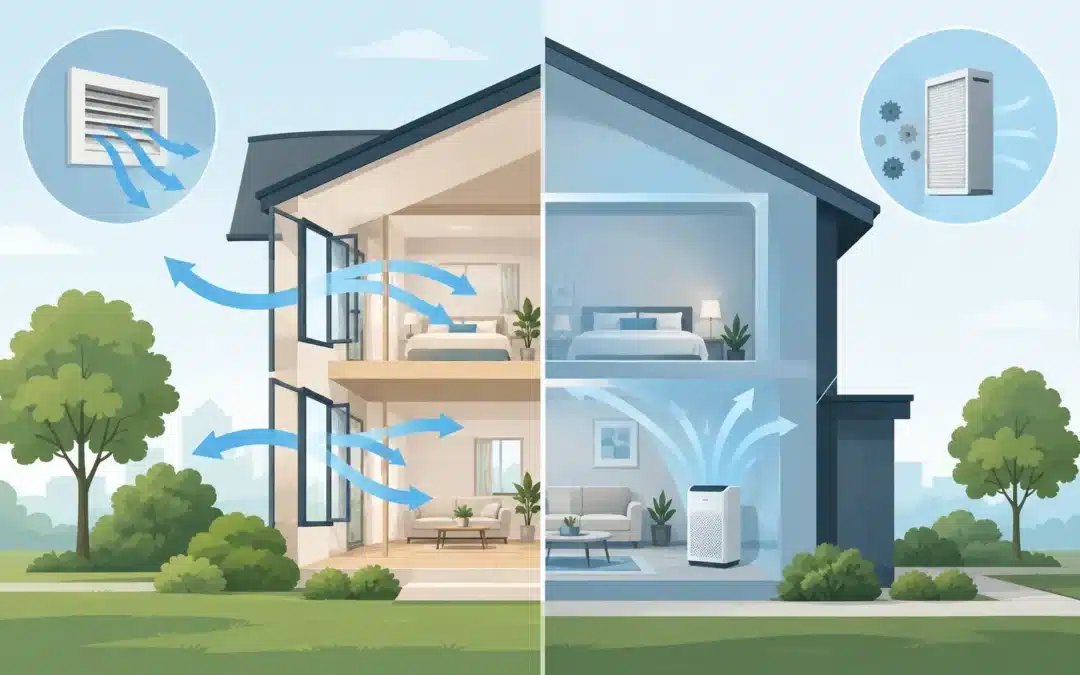
A newly renovated flat can look complete while its indoor air is still settling. The carpentry is fitted, new furniture is in place and the floors are clean, yet a sharp chemical smell may linger in bedrooms and wardrobes. For Singapore homeowners, the question of ventilation versus treatment is not about choosing one sensible habit over another. It is about understanding what fresh air can do, what it cannot do, and how to prepare a home where children, elderly family members and pets can settle in with greater peace of mind.
Ventilation is useful. Opening windows, using fans and allowing outdoor air to circulate can reduce the concentration of pollutants inside at a given moment. But formaldehyde and volatile organic compounds, or VOCs, can continue to be released from new cabinetry, laminate, adhesives, paint, flooring and furnishings. If the source remains active, the smell and pollutant levels may build up again after the windows are closed.
Ventilation versus treatment: the essential difference
Ventilation dilutes indoor pollutants by replacing some stale indoor air with fresher outdoor air. It does not change the formaldehyde or VOCs being emitted by materials in the home. Think of it as managing the air around the problem rather than addressing the emissions at their source.
Professional treatment is designed to neutralise or reduce those source emissions. A formaldehyde and VOC treatment such as G-C3N4 neutralisation targets the chemicals released from renovation materials and furniture, helping to make the air safer beyond the period when windows happen to be open.
Both approaches have a place. The practical difference is reliability. A home can be ventilated only when conditions allow it, while a source-focused treatment is intended to provide ongoing protection once the property is occupied. This matters particularly in Singapore, where many households close windows for air-conditioning, security, rain, haze or noise.
Why opening the windows is not always enough
Fresh air is one of the simplest ways to improve comfort after renovation. If the weather is suitable, open windows can help move out odours, airborne dust and accumulated humidity. Cross-ventilation is generally more effective than opening a single window, and fans can help air circulate through enclosed rooms.
However, an odour fading does not automatically mean the underlying chemicals have stopped releasing. Formaldehyde can be colourless, and VOC levels can vary from day to day. A room may smell stronger after being closed overnight, on a hot afternoon, or when air-conditioning has been running with the windows shut. Heat and humidity can affect how readily some materials release chemicals.
Ventilation also depends on the home layout. Internal bedrooms, wardrobes, storerooms and rooms facing busy roads may receive limited fresh air. Families may understandably avoid leaving windows wide open when they are out, during heavy rain, or when outdoor air quality is poor. In those situations, ventilation becomes an intermittent measure rather than a complete plan.
There is another practical concern during move-in. A family cannot realistically keep every window open for weeks while arranging furniture, installing curtains and helping young children or pets adjust to a new environment. Good indoor-air planning needs to work with real household routines, not against them.
What formaldehyde treatment is designed to do
A specialist treatment begins from a different principle: reduce the pollutants where they originate. Formaldehyde is commonly associated with composite wood products, cabinetry, adhesives and some finishes. VOCs can also come from paints, sealants, new furnishings and renovation materials.
With G-C3N4 neutralisation, the aim is to treat formaldehyde and VOC emissions without relying on heavy fragrances that simply mask a chemical smell. For homeowners, non-toxic treatment is especially relevant when the property will be used by babies, young children, elderly residents or pets. A safe treatment approach should be clearly explained, including what is applied, how long the process takes and when the household can use the space as advised by the service team.
At Aura Home Solutions, FormaldeX treatment is typically completed in around two to three hours, subject to the size and condition of the property. It is supported by air-quality testing, annual follow-ups and five-year warranty protection. These details matter because air treatment should not feel like an invisible promise. Homeowners deserve a clear process, measurable checks and a provider that remains accountable after move-in.
Treatment is not a reason to stop ventilating altogether. Regular fresh-air circulation still supports a comfortable home, helps disperse everyday odours and can reduce moisture. The benefit is that ventilation then becomes part of healthy household upkeep, rather than the only defence against ongoing renovation-related emissions.
When ventilation may be sufficient
There are circumstances where ventilation alone may be reasonable. A property with minimal new carpentry, little repainting and no strong chemical odour may simply need time, routine airing and sensible cleaning before occupation. Homes with excellent cross-ventilation and occupants who can keep windows open regularly may also find that fresh air manages day-to-day stuffiness well.
Even then, it is worth separating dust from gases. Post-renovation cleaning removes fine dust, residue and debris from surfaces, joints and hard-to-reach areas. It does not neutralise formaldehyde embedded in or emitted from materials. Likewise, an air purifier may capture particles depending on its filter, but it should not be assumed to solve every gas-phase pollutant unless it is specifically designed and maintained for that purpose.
The most sensible next step is testing rather than guessing. Free air-quality testing gives homeowners a clearer basis for deciding whether normal ventilation is enough or whether source treatment would offer useful reassurance.
When treatment is the more practical choice
Treatment is often worth considering after a major renovation, especially where the home contains extensive built-in wardrobes, kitchen cabinets, feature walls, new laminate flooring or a substantial amount of new furniture. It can also suit households moving in quickly, when there is little time to air out the property for an extended period.
Parents preparing a nursery may prefer a more controlled approach rather than waiting to see if the new-furniture smell disappears. The same applies to multigenerational households, where elderly relatives may be more sensitive to irritation or odours, and to pet owners who want to minimise avoidable chemical exposure in enclosed spaces.
A persistent smell is a useful signal, but it is not the only reason to act. Conversely, the absence of a smell is not confirmation that air quality is where you want it to be. Testing brings clarity to both situations.
Plan the move-in sequence, not just the treatment
Indoor-air preparation works best when it is coordinated with cleaning and moving. Treating a flat before renovation work is fully finished makes little sense if more painting, carpentry installation or adhesive work is still to come. The property should be substantially complete, and post-renovation cleaning should remove construction dust before the family begins bringing in belongings.
For a smooth handover, arrange your service plan around the actual completion date. First, confirm that renovation work and major installations are finished. Next, complete a detailed post-renovation clean, including dusty ledges, cabinet interiors, floors and surfaces. Then carry out air-quality testing and formaldehyde and VOC treatment at the appropriate stage. Finally, schedule the move once the home is clean, prepared and ready for household items.
This order reduces unnecessary repeat work. It also avoids the stress of coordinating separate cleaners, movers and air-treatment providers while managing keys, contractors and family commitments. A one-team plan can combine cleaning, treatment and a 15ft lorry move with boxes, wrapping and simple dismantling, with bundled move-in packages starting from $780. The value is not just convenience. It is clearer responsibility, stated inclusions and fewer moving parts on an already demanding week.
Make decisions based on your home, not a rule of thumb
There is no single number of days that every renovated home needs before it is ready to occupy. Emissions depend on the materials used, the scale of work, the room temperature, ventilation patterns and the amount of new furniture introduced. A lightly refreshed flat has different needs from a newly fitted home with wall-to-wall carpentry.
Ask for transparent answers before booking any treatment. Find out whether testing is included, how long the work will take, whether the method is non-toxic, what follow-up support is offered and what the warranty covers. Be cautious of services that rely only on perfumes or vague claims without explaining their process.
Your new home should not require your family to choose between a closed, air-conditioned space and confidence in the air you breathe. Air the rooms when practical, clean thoroughly, test rather than assume, and consider source-focused treatment when renovation materials and move-in timing call for more dependable support.