
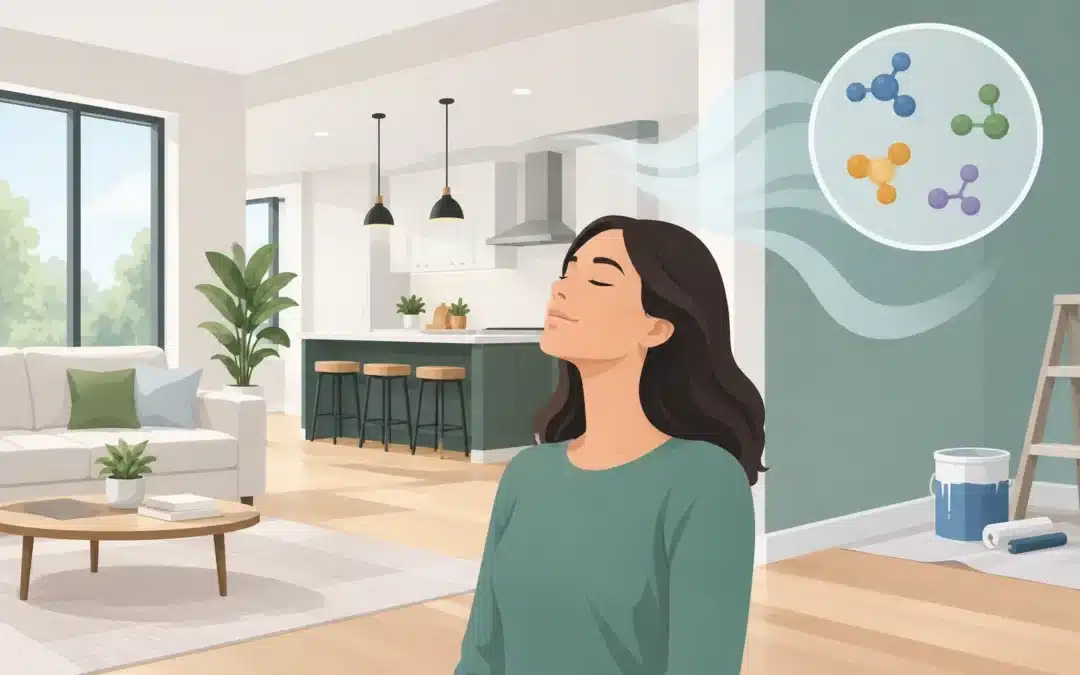
That new-carpet, fresh-paint smell may feel like the final sign that renovation is complete. But for a family preparing to move into a new HDB flat, condominium or landed home, it can also signal that chemicals are still being released into the air. So, are VOCs harmful? They can be – particularly when levels are high, ventilation is limited, and exposure continues day after day.
VOCs, or volatile organic compounds, are gases released from many everyday building and furnishing materials. A newly renovated home can have several sources releasing compounds at the same time: freshly painted walls, new carpentry, flooring adhesives, sealants, mattresses, curtains and furniture. The concern is not about creating fear around every new item. It is about making an informed decision before your household begins spending long hours in the space.
Are VOCs harmful to your household?
The health effect of VOC exposure depends on the specific compound, its concentration, how long someone is exposed, and their individual sensitivity. VOCs are a broad group, not one single chemical. Some cause little concern at typical indoor concentrations, while others require more careful attention.
In the short term, higher VOC levels may contribute to irritation of the eyes, nose or throat, headaches, dizziness, nausea, fatigue or a worsening of asthma-like symptoms in sensitive people. These signs can also have other causes, so they should not be used as a home air-quality test. However, if symptoms consistently ease when someone leaves the home and return after spending time indoors, the indoor environment is worth investigating.
Longer-term exposure to certain VOCs can be more concerning. Formaldehyde is one of the best-known examples in newly renovated homes because it may be emitted from composite wood products, cabinetry, laminate finishes, glues and some fabrics. It is an irritant, and prolonged exposure at elevated levels is not something homeowners should simply wait out.
Babies and young children, elderly residents, people with respiratory conditions and pets may be more affected by poor indoor air quality. They may spend more time at home, have greater sensitivity, or be less able to explain that something feels wrong. For a nursery, a home with an elderly parent, or a household with cats and dogs, a cautious move-in plan offers practical peace of mind.
Why renovation increases VOC exposure
Renovation does not automatically make a home unsafe. The issue is that multiple new materials can release gases at once, especially in the first days and weeks after installation. In compact Singapore homes, closed windows, air-conditioning use and limited cross-ventilation can allow pollutants to build up indoors.
Carpentry is often a major consideration. Built-in wardrobes, kitchen cabinets, TV consoles and storage systems commonly use engineered wood boards and adhesives. Paints, varnishes, silicone, waterproofing products and flooring materials can add to the overall chemical load. New loose furniture and mattresses may also contribute, even when the renovation work itself has finished.
Heat and humidity can influence off-gassing too. Singapore’s warm, humid climate may encourage some materials to release chemicals more quickly. This does not mean opening every window for a weekend will solve the problem. Ventilation helps dilute indoor pollutants, but it does not remove the source materials or confirm whether the remaining levels are suitable for your household.
A strong smell is a reason to pay attention, but smell alone is not a reliable safety measure. Some VOCs can be noticeable at very low levels, while others may be present without an obvious odour. Likewise, a home that smells pleasant after air freshener use is not necessarily cleaner. Fragrance products can add further VOCs to the air.
What homeowners can do before moving in
The most practical approach is to treat indoor-air preparation as part of your move-in schedule, alongside post-renovation cleaning and furniture delivery. Start by allowing adequate time after renovation, keeping the home ventilated where weather and security permit. Run exhaust fans in kitchens and bathrooms, and avoid introducing unnecessary scented products, aerosols or strong cleaning chemicals during this period.
Cleaning is still essential, but it solves a different problem. Post-renovation cleaning removes visible dust, fine debris and residues left by contractors. VOCs are gases, so they need a separate air-quality strategy. A thoroughly cleaned flat can still have formaldehyde or VOC emissions from new materials.
Air purifiers may be useful as part of a wider plan, particularly models designed with suitable gas-filtration media. However, performance varies according to the room size, airflow, filter condition and the type of VOC present. They should not be treated as a substitute for dealing with persistent emissions at source.
The clearest next step is professional air-quality testing. Testing gives you a baseline rather than relying on guesswork, odour or online advice that may not apply to your home. It also helps you decide whether you need continued ventilation, targeted treatment or a follow-up check before moving in.
Treatment should address the source, not mask the smell
When air testing identifies formaldehyde and VOC concerns, ask what the treatment is designed to do, how long it takes, whether it is suitable for occupied homes, and what happens after the team leaves. A quick fragrance spray or deodorising service may make a room smell different, but that is not the same as reducing chemical emissions.
Aura Home Solutions uses a non-toxic G-C3N4 neutralisation treatment through its FormaldeX service, designed to address formaldehyde and VOCs at source rather than cover them with perfume. Treatment is typically completed in two to three hours, making it easier to coordinate around final cleaning, furniture delivery and your moving date. Free air-quality testing, annual follow-ups and five-year warranty protection provide a clearer route for households that want reassurance beyond a one-off treatment.
There is no one-size-fits-all answer. A lightly refreshed home with minimal new furniture may only need ventilation, cleaning and sensible monitoring. A full renovation with extensive new carpentry, fresh paint and a fast move-in deadline may call for testing and treatment before children, elderly relatives or pets begin using the space every day. The right choice depends on the materials used, the size and ventilation of the home, and who will live there.
A safer move-in plan is easier to manage
Many move-in problems happen because tasks are arranged separately and too late. Renovation dust remains behind cabinets, furniture arrives before deep cleaning, and air treatment is only considered when someone notices an unpleasant smell. Planning these services in the correct order reduces disruption.
A sensible sequence is to complete renovation works first, then arrange post-renovation cleaning to remove dust and debris. Air-quality testing and VOC or formaldehyde treatment can follow before final move-in cleaning, moving and unpacking. This helps ensure that the surfaces your family touches are clean and that your home is prepared for comfortable everyday living.
For households managing several vendors, one coordinated service plan can remove much of the stress. Bundled move-in support can combine treatment, cleaning and relocation arrangements from $780, with clear inclusions agreed before work starts. That matters when you are already coordinating contractors, handovers, school schedules and a moving date.
If anyone in the household develops severe breathing difficulty, chest tightness or a serious reaction after entering the home, leave the area and seek medical advice promptly. For less urgent but recurring symptoms, keep note of when they occur and discuss them with a healthcare professional while arranging an indoor-air assessment.
Your renovated home should feel ready for family meals, quiet evenings and a good night’s sleep – not like another problem to solve after the keys are collected. Giving air quality the same attention as cleaning and moving can make the first day at home feel like the beginning it should be.