
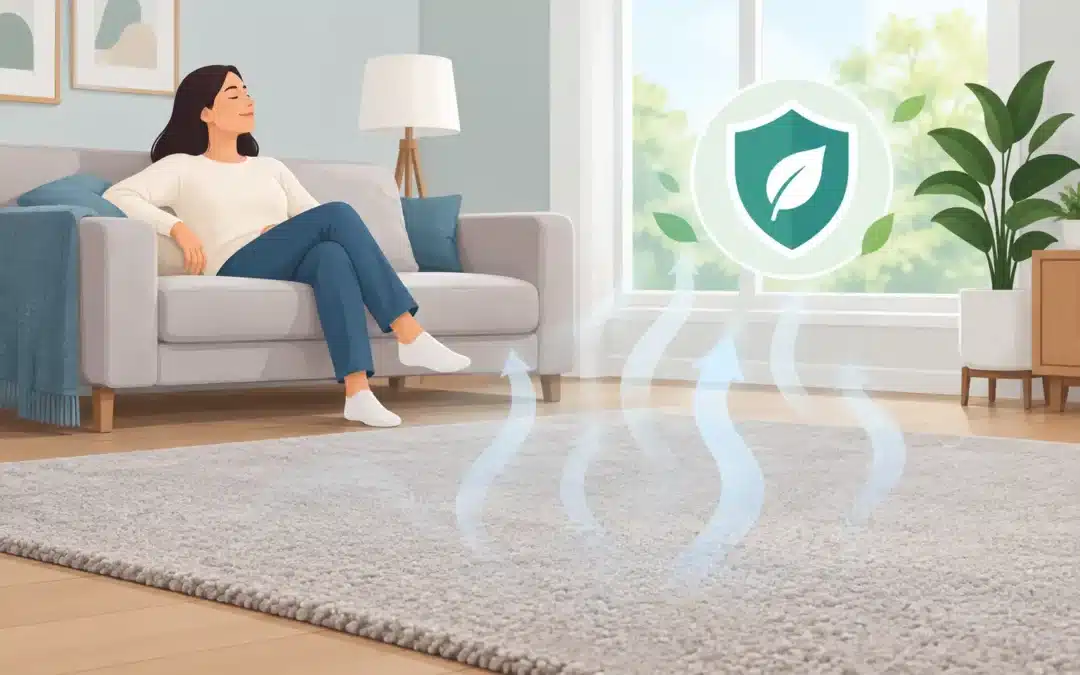
That new-carpet smell can make a freshly renovated home feel unfinished, especially when it lingers in bedrooms, nurseries or an enclosed HDB flat. This new carpet off gassing guide explains what the smell may mean, how to reduce exposure before move-in, and when professional air-quality support is worth considering.
What new carpet off gassing actually is
Off gassing is the release of gases from materials after they are manufactured, transported or installed. With new carpet, the source is not always the carpet fibres alone. Adhesives, backing materials, underlay, stain-resistant coatings and protective packaging can all release volatile organic compounds, commonly called VOCs.
Formaldehyde can also be a concern in a newly renovated property, although it is more commonly associated with composite wood products, built-in carpentry, cabinets and some furnishings than with carpet alone. The practical issue is that a home rarely contains just one new material. Carpeting may be installed alongside new wardrobes, curtains, paint, vinyl flooring and furniture, creating a combined indoor-air load.
A smell is not a reliable measure of risk. Some VOCs have noticeable odours at low levels, while other airborne chemicals are difficult to detect by smell. Equally, a strong odour is a clear signal that the space needs more ventilation and attention before a baby, elderly parent or pet spends long periods there.
How long does new carpet off gassing last?
The most noticeable emissions often occur in the first few days after installation. For many households, the new-carpet odour improves substantially within several days to a few weeks when windows are opened regularly and the room is not continually sealed by air-conditioning.
However, there is no single timeline. Off gassing can continue at lower levels for weeks or longer, depending on the product, the installation method, room temperature, humidity, ventilation and the number of other new materials in the property. Singapore’s warm, humid conditions can make enclosed rooms feel especially stuffy, while frequent rain may limit the time windows can remain open.
This does not mean every new carpet creates a long-term indoor-air problem. It means a sensible move-in plan should account for the whole home rather than relying on the odour to disappear by itself. If a room still smells strongly after consistent airing, or the smell becomes more noticeable when the air-conditioning is on, it is worth investigating further.
Signs your household should take extra care
People react differently to indoor odours and VOC exposure. A healthy adult may notice little beyond an unpleasant smell, while a child with asthma or an elderly resident may be more sensitive to an irritating environment. Headaches, eye or throat irritation, nausea, dizziness and worsening respiratory discomfort are reasons to leave the affected room, improve ventilation and seek appropriate medical advice if symptoms persist or are severe.
Extra care is sensible when you are preparing a nursery, moving in with young children, welcoming an elderly family member, or creating a space for pets that stay indoors most of the day. It is also sensible after extensive renovation, where the carpet is only one part of a larger mix of new finishes and furnishings.
Avoid assuming that a scented spray, diffuser or air freshener solves the issue. These products can mask the odour and add further fragrance compounds to the air. A fresher smell is not the same as cleaner air.
Practical steps before you move in
Start by asking your carpet supplier what was used during installation. Find out whether adhesives were applied, whether the carpet has a backing treatment, and whether the manufacturer provides low-emission information. Keep the product details and invoices. They are useful if you need to raise a concern later.
Then give the space time and airflow. Open windows and internal doors when weather and security allow, and use fans to move air towards an open window rather than simply circulating it around the room. If possible, ventilate the home before placing mattresses, soft toys, clothing or boxed belongings inside. These items can absorb odours and make the room harder to refresh.
Keep the temperature comfortable rather than excessively warm. Higher heat can increase the release of some VOCs. Air-conditioning may improve comfort, but it does not automatically remove chemical pollutants. Where possible, use it alongside planned periods of natural ventilation.
A properly specified air purifier can be helpful as an additional measure, particularly one that uses activated carbon for gases alongside particle filtration. It should not be treated as a substitute for ventilation or source control, and it needs the correct filter capacity and regular replacement to remain effective.
For a newly renovated home, arrange post-renovation cleaning before your final move-in clean. Fine renovation dust can settle into carpet fibres, skirting edges and air-conditioning vents. Removing that dust first helps you begin with a cleaner space and prevents it being carried into bedrooms and living areas with your belongings.
When ventilation is not enough
If the odour remains persistent, you are concerned about formaldehyde from surrounding carpentry, or your household includes sensitive family members, air-quality testing provides a clearer starting point than guesswork. Testing can help identify whether formaldehyde and VOC levels require further action and whether treatment should focus on the whole home rather than one room.
This is particularly useful when a renovation schedule is tight. Many families do not have the luxury of leaving a flat empty for months while materials settle. They need a practical plan that fits handover, cleaning, moving and school or work commitments without compromising peace of mind.
Aura Home Solutions uses a non-toxic G-C3N4 neutralisation treatment under its FormaldeX service to address formaldehyde and VOCs at source. The treatment is designed for newly renovated HDB flats, condominiums and landed homes, with free air-quality testing, annual follow-ups and five-year warranty protection available. Treatment typically takes two to three hours, allowing homeowners to coordinate air treatment with cleaning and relocation instead of managing several separate appointments.
No treatment should be presented as a reason to ignore basic ventilation, product information or ongoing cleaning. The best results come from combining sensible material choices, professional cleaning, tested air-quality support where needed, and a realistic move-in schedule.
A calmer move-in sequence for renovated homes
The order of tasks matters. When possible, allow major carpentry, paintwork, flooring and carpet installation to finish first. Follow with post-renovation cleaning to remove dust and debris, then carry out any air-quality assessment and treatment before your furniture, boxes and family arrive.
Once the air and surfaces are prepared, a move-in clean can focus on the details that make a home ready to live in: kitchen cabinets, bathrooms, window ledges, wardrobes and high-touch areas. Your belongings can then be moved into a cleaner, more organised environment, rather than being unpacked around renovation residue and lingering odours.
This approach may require a few extra days between renovation completion and move-in, and that is a trade-off worth planning for. If your deadline cannot move, coordinate the work early and choose providers that can clearly explain timing, inclusions and any follow-up support. Clear scope matters more than vague promises of a quick fix.
Questions homeowners often ask
Can I sleep in a room with new carpet straight away?
It depends on the odour, ventilation, installation materials and your household’s sensitivities. If the room smells strong or causes irritation, avoid sleeping there until it has been well aired and the concern has been assessed. For a nursery or a room used by an elderly resident, a more cautious approach is sensible.
Does shampooing a new carpet remove VOCs?
Not necessarily. Shampooing may address surface dirt or residues, but it does not reliably remove gases released from backing, adhesives or nearby renovation materials. Use only cleaning methods approved for the carpet, as excess moisture can create separate problems in Singapore’s humidity.
Should I delay fitting the carpet until after other renovation work?
Where the renovation sequence allows, installing carpet after dusty works are complete can reduce the chance of dust settling into the fibres. Your contractor can advise on the practical order, but protecting the carpet during any remaining work is essential.
A new home should not feel like a compromise between meeting a move-in date and caring for the people you love. Give the space time to air, clean it properly, test when there is uncertainty, and make each decision with your household’s comfort in mind.