
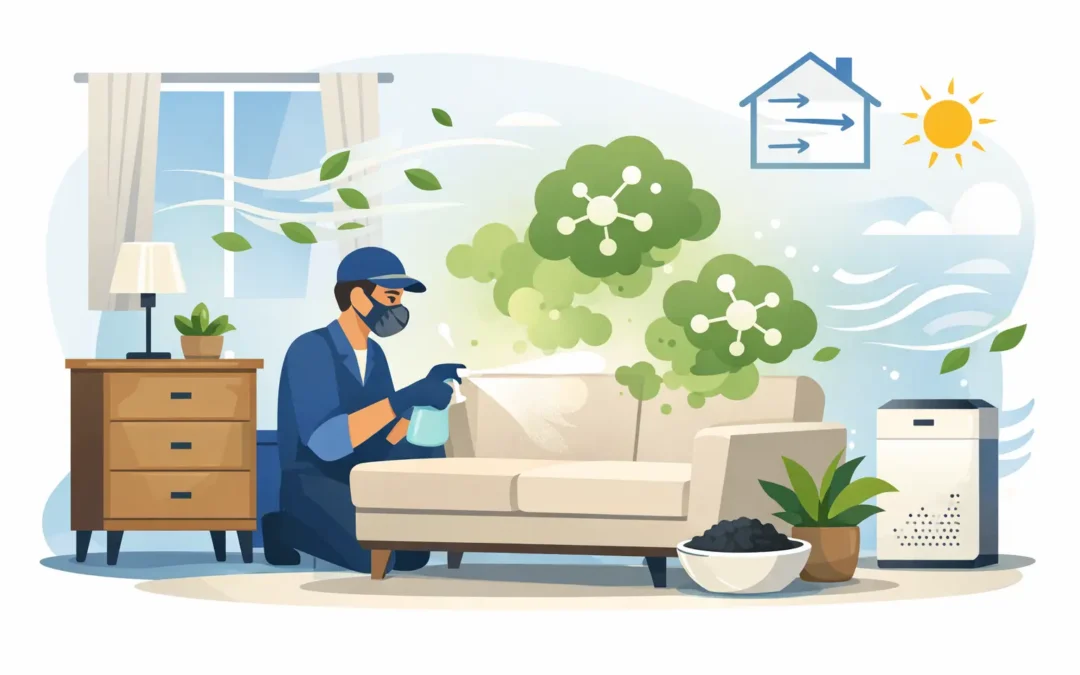
That sharp ‘new furniture’ smell may feel like part of moving into a freshly renovated home, but it can also signal formaldehyde and other volatile organic compounds (VOCs) being released from new carpentry, cabinets, wardrobes and furniture. Knowing how to remove formaldehyde from new furniture helps you make safer decisions before your family, pets or elderly parents settle in.
The challenge is that formaldehyde is not simply a surface smell that disappears after one thorough clean. It can off-gas gradually from engineered wood, adhesives, coatings, laminate, upholstery foam and certain fabrics. In Singapore’s warm, humid climate, closed windows and air-conditioning can also allow pollutants to build up indoors.
Why new furniture can release formaldehyde
Formaldehyde is commonly found in resins and glues used to bind composite wood products such as plywood, particleboard, medium-density fibreboard and laminate finishes. These materials are widely used because they are practical and affordable, particularly for built-in carpentry and flat-pack furniture.
The amount released depends on the product, its age, the quality of materials used, room temperature, humidity and ventilation. A newly installed wardrobe in a small bedroom may create a more noticeable issue than a single side table in a well-ventilated living room.
Some people notice watery eyes, throat irritation, headaches or a persistent chemical odour. These symptoms can have several causes, so they are not a reliable test on their own. Still, if a room smells chemical or stuffy after renovation or furniture delivery, treat it as a reason to improve ventilation and assess the air quality rather than masking it with fragrance.
How to remove formaldehyde from new furniture safely
There is no single overnight household remedy that reliably removes formaldehyde from every item. The most effective approach combines ventilation, source management, careful cleaning and, where readings or household needs call for it, a professional source-neutralisation treatment.
Ventilate strategically, not just occasionally
Fresh-air exchange is the most useful first step. Open windows and internal doors whenever outdoor conditions allow, especially for rooms containing new wardrobes, cabinets, bed frames or sofas. Use fans to move air towards open windows rather than simply circulating it around the room.
For a newly renovated HDB flat or condominium, try to ventilate daily before moving in. If the property is vacant, leave selected windows open safely where possible, with appropriate rain and security precautions. Air-conditioning may make a room feel more comfortable, but it does not remove the source of formaldehyde. In a closed room, it can leave pollutants concentrated in the air you breathe.
Ventilation reduces airborne levels, but it takes time because the furniture can continue off-gassing. It is a helpful measure, not a complete solution for significant emissions.
Remove packaging and air out individual pieces
Plastic wrapping, cardboard and enclosed storage spaces can trap chemical odours after delivery. Remove all packaging promptly, then open drawers, cupboard doors and wardrobe compartments so that trapped air can disperse.
For movable furniture, place it in a well-ventilated area for several days before bringing it into a nursery, bedroom or study. This may not be practical for a custom-built cabinet or a large dining table, but airing out smaller pieces can reduce the initial build-up of odour.
Do not place new furniture in direct harsh sunlight for prolonged periods in the hope of ‘baking out’ chemicals. Higher heat can increase the rate at which formaldehyde is released, potentially making the indoor-air problem worse. Heat and humidity can also damage veneers, warp timber and affect upholstery.
Clean dust and residues without adding more chemicals
Post-renovation dust can hold fine particles from sanding, drilling and installation work. Wipe hard furniture surfaces with a clean, damp microfibre cloth and use a vacuum with a suitable fine-particle filter for floors, soft furnishings and crevices. This will not neutralise formaldehyde inside boards or glues, but it removes dust and residues that should not remain in a move-in-ready home.
Choose mild, low-odour cleaning products. Strongly perfumed sprays, solvent-based cleaners and air fresheners can add more VOCs to the room, making it harder to tell whether conditions are improving. A fresh scent is not the same as clean air.
Seal exposed composite wood where appropriate
If you can see unfinished particleboard or MDF edges inside drawers, under a bed frame or behind shelving, a low-VOC sealant may help limit emissions from those exposed surfaces. This is most useful for accessible, unfinished sections rather than every inch of furniture.
The trade-off is that sealing must be done properly and the sealant itself needs time to cure. An unsuitable product can introduce its own fumes or interfere with the furniture finish. For expensive built-ins, ask the carpenter or manufacturer what materials are compatible before applying anything.
Use air purifiers as support, not as the whole plan
An air purifier with activated carbon can help reduce some gaseous pollutants, while a HEPA filter captures particles such as renovation dust. Both can be worthwhile for bedrooms and nurseries, particularly while the home is being aired out.
However, carbon filters have limited capacity. Once saturated, they need replacement, and their performance varies widely by model, filter weight, airflow and room size. A purifier cannot stop emissions from a wardrobe, kitchen cabinet or newly installed feature wall. Think of it as a supporting layer after you have addressed ventilation and the source.
Be cautious with ‘natural’ fixes
Bowls of vinegar, coffee grounds, baking soda, charcoal bags and houseplants are often suggested for new-furniture smells. They may make a room feel fresher or absorb a small amount of odour under certain conditions, but they are not dependable formaldehyde-removal methods for a newly furnished home.
Avoid ozone generators completely in occupied homes. Ozone can irritate the lungs and may react with other indoor chemicals to form additional pollutants. For households with babies, children, elderly residents, asthma sufferers or pets, unproven chemical treatments are not worth the risk.
When professional formaldehyde treatment makes sense
DIY measures may be enough for one small item with a mild, short-lived odour. They are less reassuring when an entire flat has new carpentry, several rooms smell chemical, or your household needs to move in soon.
Professional air-quality testing gives you a clearer starting point than relying on smell alone. It can help identify whether formaldehyde and VOCs remain a concern after renovation cleaning and furniture installation. Testing is particularly helpful before setting up a nursery, when an elderly family member has respiratory sensitivities, or when pets will spend most of the day indoors.
A proper treatment should target pollutants at their source rather than cover them with fragrance. Aura Home Solutions uses a non-toxic G-C3N4 neutralisation treatment under its FormaldeX service, alongside air-quality testing, annual follow-ups and five-year warranty protection. Treatment is typically completed in two to three hours, which can be practical when cleaning, furniture delivery and moving dates are all competing for attention.
Ask direct questions before booking any provider: what is being treated, whether the process is safe for children and pets, how long the work takes, whether testing is included, and what warranty or follow-up support is offered. Clear answers matter more than dramatic claims of instant purification.
Plan your move-in around cleaner indoor air
The least stressful time to address formaldehyde is before boxes, curtains and daily routines fill the home. Ideally, complete carpentry and furniture installation first, remove renovation dust, ventilate the rooms, test air quality where needed, and arrange treatment before moving in.
If your timeline is tight, focus first on bedrooms, nurseries and spaces where family members spend the longest periods. Keep new furniture doors and drawers open during the day, ventilate consistently, and avoid adding scented products that can hide the problem.
A new home should feel ready for family meals, restful sleep and ordinary life, not like a room you have to tolerate. Taking a measured approach now gives everyone a more comfortable place to settle into from the first night.