
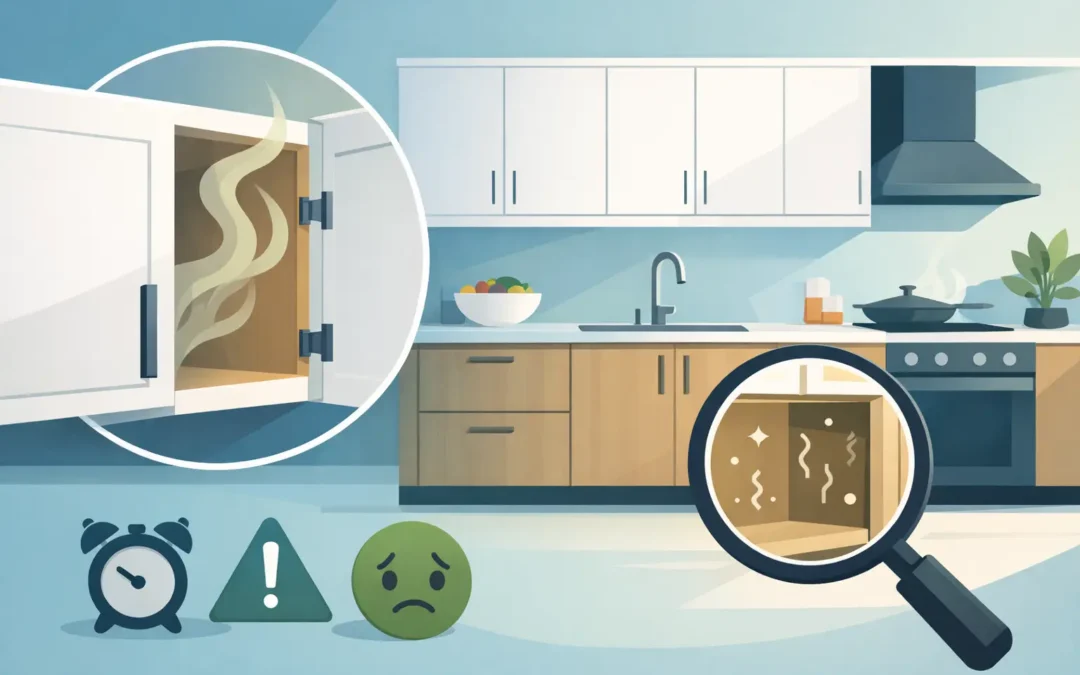
That sharp, sweet, woody or chemical scent from newly fitted carpentry can make an otherwise beautiful home feel far from move-in ready. If you are asking why new cabinets smell, the short answer is that fresh cabinet materials, finishes and adhesives can release gases into the air. The smell may fade, but the source of the odour deserves attention, particularly when you are preparing a nursery, moving in with elderly parents, or sharing the space with pets.
New cabinets are a major investment in an HDB flat, condominium or landed home. Understanding what is behind the smell helps you make a calm, informed decision before unpacking your belongings.
Why new cabinets smell after renovation
Most built-in cabinets are made from a combination of engineered wood panels, laminates, edging, glues, sealants and surface coatings. Each material may release volatile organic compounds, commonly called VOCs, as it settles into your home environment. This process is known as off-gassing.
One VOC that homeowners often ask about is formaldehyde. It can be present in the resins used to bind wood fibres and particles in materials such as plywood, particleboard and medium-density fibreboard. Formaldehyde has a distinct pungent smell for some people, although not everyone can detect it at the same level.
The odour can also come from the laminate adhesive, paint, lacquer, silicone, drawer runners, protective wrapping or new furniture installed alongside the cabinets. That is why a room can still smell even when the carpentry itself looks dry and complete.
A noticeable smell does not automatically mean the air quality is unsafe, and no smell does not guarantee that there are no emissions. Our sense of smell is subjective. However, a strong or persistent odour is a sensible reason to investigate rather than simply cover it with fragrance.
Why the smell can be stronger in Singapore homes
Singapore’s warm, humid climate can make new-cabinet odours more obvious. Heat often speeds up the release of gases from new materials, while humidity and limited air circulation can keep those emissions concentrated indoors.
This is especially common after a renovation, when windows have been closed for security, air-conditioning is running, and several new items are releasing VOCs at once. A study room with full-height cabinets, a kitchen with extensive carpentry, or a bedroom with a new wardrobe and bed frame may hold the smell longer than an open living area.
The first days and weeks after installation are often the most noticeable. Some materials can continue releasing lower levels of formaldehyde and VOCs over a longer period, depending on the board quality, amount of carpentry, room temperature, ventilation and how the space is used.
When should you be concerned about cabinet odours?
There is no need to panic because a new wardrobe has a mild smell. Still, do not dismiss an odour that is intense, causes immediate discomfort, or remains despite regular ventilation and post-renovation cleaning.
Pay closer attention if anyone in the household experiences eye, nose or throat irritation, headaches, nausea or an unusual sensitivity when spending time in the room. These symptoms can have different causes, so they are not a diagnosis of formaldehyde exposure. They are, however, a practical signal to improve ventilation and consider professional air-quality testing.
Households with babies, young children, elderly residents, pets or people with respiratory sensitivities often prefer to address air concerns before moving in. This is not about creating fear around new carpentry. It is about giving the people who will use the room every day a more comfortable start.
Ventilation helps, but it has limits
Opening windows and cabinet doors is a useful first step. Where practical, create cross-ventilation by opening windows at opposite sides of the home, and leave drawers and cupboards open for part of the day so trapped odours can disperse. Run exhaust fans in kitchens and bathrooms, especially when surrounding renovation works are still drying.
A thorough post-renovation clean also matters. Fine dust can hold onto odours and settle inside cabinet interiors, hinges and drawer tracks. Wiping surfaces with appropriate cleaning methods removes dust, but it does not neutralise gases that are still being released from the boards, glue or finishes.
Air purifiers can support day-to-day air management, depending on their filter design and room size. Yet they should not be treated as a complete answer to a source inside newly installed carpentry. Similarly, scented sprays, reed diffusers and candles may mask the smell temporarily, but they can add more fragrance compounds to an already newly renovated room.
How to check whether your new cabinets need treatment
The most reliable next step is to measure rather than guess. Professional indoor-air testing can assess formaldehyde and VOC levels in the actual rooms your family will use. It provides a clearer starting point than relying on odour alone and helps you decide whether ventilation is enough or whether targeted treatment would be worthwhile.
Testing is especially useful after renovation handover, before your moving date. Ask for the results to be explained in plain language, including which rooms were tested, what was detected and what follow-up is recommended. Transparent service matters because every home is different. A compact flat with extensive carpentry may need a different plan from a naturally ventilated landed property with only one new wardrobe.
If treatment is advised, look for an approach designed to neutralise formaldehyde and VOCs at their source rather than simply perfume the room. Check that the process is non-toxic for household use, ask how long it takes, and confirm what warranty or post-treatment support is included. These details make it easier to plan your cleaning, moving and first night at home without surprises.
A practical move-in plan for a fresher home
Timing makes a real difference. Once major carpentry, painting and touch-ups are complete, arrange post-renovation cleaning to remove dust from shelves, cabinet interiors, skirting and hard-to-reach corners. Then test the air before filling cupboards with clothes, crockery, baby items or pantry supplies.
Where treatment is needed, schedule it before your move and leave enough time for any recommended airing or final checks. This order prevents a common frustration: moving everything in first, then having to clear rooms again for cleaning or air treatment.
Aura Home Solutions coordinates formaldehyde and VOC treatment, cleaning and moving support for homeowners who would rather not manage several vendors at the busiest point of a renovation. Its FormaldeX service uses non-toxic G-C3N4 neutralisation, with free air-quality testing, treatment typically completed in two to three hours, annual follow-ups and five-year warranty protection. For families preparing to move, that means one clearer plan instead of chasing separate appointments.
Questions homeowners often ask
Will the smell disappear on its own?
It may reduce over time, particularly with good ventilation, but the timeline varies widely. A mild odour can settle relatively quickly, while a room with substantial new engineered-wood carpentry may retain a noticeable smell for much longer. If the smell persists or the room will be used by children or elderly family members, testing gives you a more confident basis for action.
Can I move in while the cabinets still smell?
It depends on the level of odour, the test results, the ventilation available and who will be living in the home. If you have flexibility in your schedule, handling cleaning and air treatment before move-in is often the less stressful option. Your belongings stay clean, your cabinets can air out properly, and you can settle in with fewer unfinished tasks.
Is a strong perfume smell a sign that the problem is solved?
No. Fragrance changes what you smell, not necessarily what is in the air. For a genuinely fresher home, focus on ventilation, cleaning, testing and, where appropriate, a source-focused formaldehyde and VOC treatment.
A new cabinet smell should not take away the excitement of receiving your renovated home. Give the air the same attention you give the workmanship, cleaning and move itself, so the first thing your family notices when they walk in is the comfort of being home.